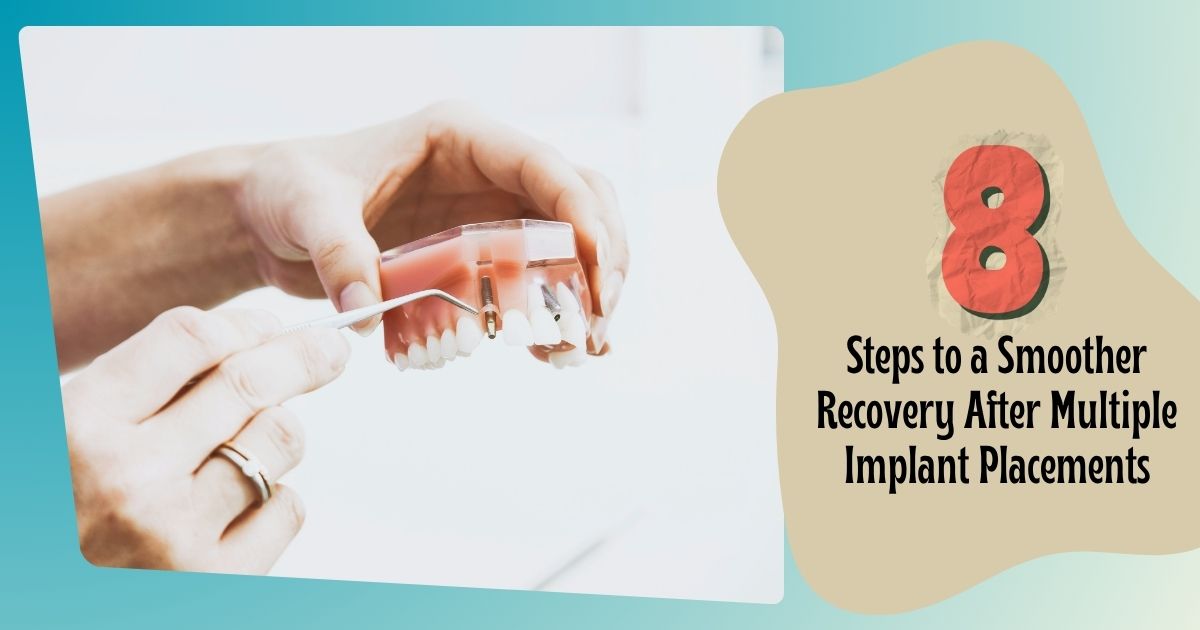
Having multiple dental implants placed in one appointment is a major step toward regaining your smile and your ability to chew properly. Although the procedure is extremely predictable, it is the recovery phase that leaves most patients feeling unsure. When multiple implants are placed in one session, the body’s healing reaction is naturally stronger, more swelling, more tenderness, and a longer stretch of time before you feel fully back to normal. Fortunately, recovery does not come down to luck. It comes down to preparation and discipline. By following these 8 steps you will be able to minimize discomfort, prevent complications, and protect your new implants during the critical recovery time.
1. Apply Ice Religiously for the First 24 Hours
Peaks of swelling during the initial 48 hours following surgery. Place an ice pack wrapped in a thin cloth against the outside of your face for 20 minutes on and 20 minutes off, repeating this as frequently as you can throughout the first day. This narrows the blood vessels, lessens the buildup of fluid, and greatly reduces both swelling and bruising. Never put ice straight onto the skin, and avoid using heat during this time. Heat makes swelling worse.
2. Sleep with Your Head Elevated
When you lie flat, gravity causes fluid to gather in the surgical area. During the first three to four nights, keep your head raised on two or three pillows while sleeping, or rest in a reclined position in a comfortable armchair. This easy change lessens throbbing, cuts down on morning swelling, and allows you to rest more comfortably.
3. Take Medications Exactly as Prescribed
Your dentist will probably prescribe antibiotics, pain medication, and maybe an anti-inflammatory as well. Take them as scheduled and not only when you are in pain. Antibiotics require steady blood levels to stop infection, and it is much easier to stay ahead of pain than to chase it. If you have nausea or unusual side effects, contact your clinic instead of quitting the medication by yourself.
4. Follow the Soft-Food Timeline
Healing is directly influenced by nutrition. During the first 24 hours, consume only cool, soft liquids like yogurt, smoothies, cold soups, and protein shakes. Steer clear of straws, since the suction may dislodge blood clots. Over the coming week, move on to soft foods such as mashed potatoes, scrambled eggs, and well-cooked pasta. Stay away from hard, crunchy, spicy, and hot foods, which can irritate the surgical sites.
Foods to Avoid During the First Two Weeks
- Crusty bread, chips, and nuts
- Spicy curries and acidic foods
- Very hot beverages
- Small seeds that can lodge in surgical sites
- Alcohol, which thins blood and delays healing
5. Do Not Smoke or Use Tobacco
Smoking is the most preventable factor behind implant failure. Nicotine reduces blood flow to the surgical area, depriving the bone of the oxygen and nutrients it requires for osseointegration. If you are a smoker, make a commitment to quit at least two weeks prior to surgery and for the entire healing process. Everything hinges on this for your implants.
6. Maintain Gentle Oral Hygiene
For the first few days, avoid brushing directly over the surgical sites. Rather, begin gently rinsing with a prescribed antimicrobial mouthwash 24 hours after surgery. Use a soft brush to clean the remaining teeth as you normally would but take caution not to disturb the healing sites. After the first week has passed your dentist will let you know how and when to begin cleaning around the implants again.
7. Avoid Strenuous Activity and Pressure
Physical activity increases blood pressure and may lead to bleeding in the surgical sites. Avoid lifting heavy objects, leaning over, and exercising for at least five to seven days. You should also avoid touching the implants with your tongue or fingers, and you should not poke the area with any objects.
8. Attend Every Follow-Up Appointment
Follow-up appointments cannot be neglected. Your dentist needs to check that the implants are healing and fusing correctly, look out for any signs of infection at an early stage, and adjust your temporary prosthesis if needed. Not showing up allows problems to arise.
The healing following multiple implants is a brief process that needs patience and self-control. You set the stage for osseointegration and a long-lasting result by controlling the swelling, taking the medication as directed, eating right, and avoiding harmful habits. If you are considering this procedure, choose an experienced Dental Implants in Chennai professional. This ensures that you will receive comprehensive guidance before the surgery. The attentive post-operative care you receive can help you to heal as quickly as possible.