
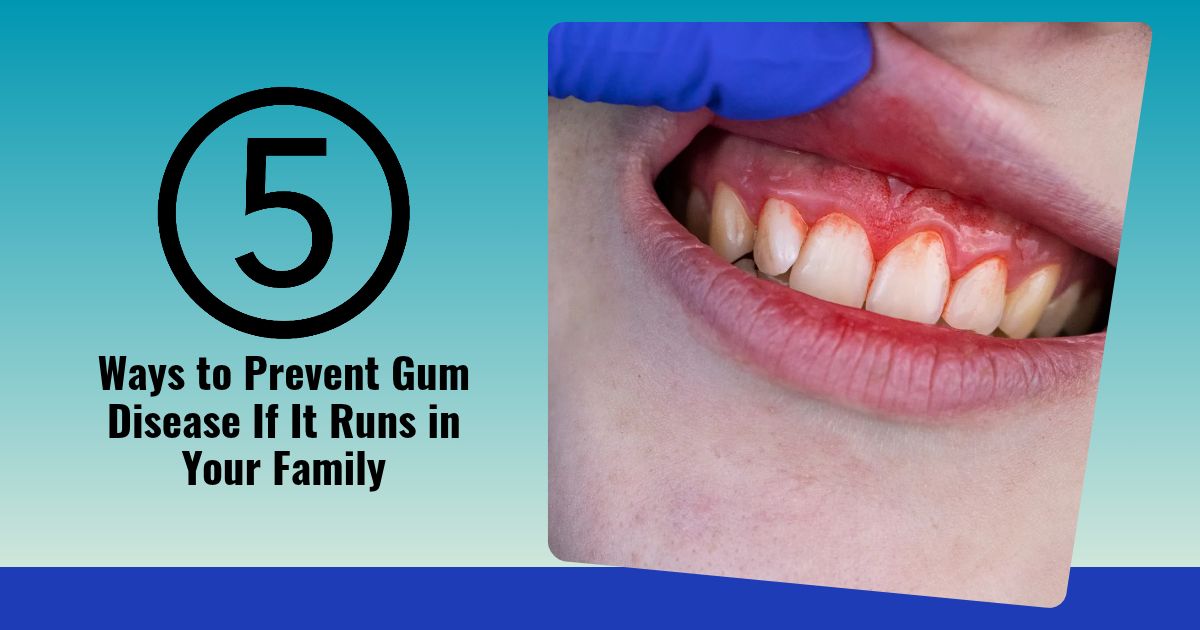
If you have a family history of bleeding gums, receding gums or lost teeth with your mother or father or siblings then you may be genetically prone to gum disease. Studies show that between up to 30% of people may have a genetic susceptibility to periodontal disease. Your body reacts too aggressively to the harmful bacteria in plaque. Although you may be genetically prone it is your overall lifestyle and oral hygiene that will trigger the disease. Although having family members with periodontal disease will increase your risk, you can reduce your chances or slow it down significantly.
1. Get a Baseline Periodontal Assessment Early
The majority of people visit a dentist only when they have a problem. However, gum disease does not give any signal in its very beginning and, therefore, is highly destructive being silent. In case your family members have this issue, do not wait for it to become inevitable. Ask for a comprehensive gum assessment. This way, you will have a personal indicator to follow further developments in your oral health.
2. Upgrade Your Daily Hygiene Beyond Basic Brushing
Brushing alone leaves approximately 40% of tooth surface unclean, namely the spaces between the teeth and the area surrounding the gum line at which periodontal disease originates. Thus, for somebody who is genetically predisposed, this is unacceptable.
- Use a toothbrush with a pressure sensor: When people brush their teeth on their own, they tend to apply too much pressure, damaging the gums that have already started to recede. A toothbrush with a pressure sensor will alert you when you are using too much pressure.
- Use a water flosser: A water flosser will clean 50% deeper than regular flossing and is great for people with bleeding gums.
- Use interdental brushes to clean between the teeth: Interdental brushes clean the sides of the teeth and remove plaque in a way that flossing cannot.
- Consider using an antimicrobial mouthwash: Some mouthwashes reduce the number of bacteria in the mouth, for example, chlorhexidine and mouthwash with essential oils. However, they should be used sparingly because they can stain the teeth.
3. Schedule Professional Cleanings More Frequently
The standard six-month cleaning regimen is designed for average-risk patients. Patients are not average-risk if there is a familial tendency towards periodontitis. For those at genetic risk, many dentists recommend annual cleaning every three to four months to prevent plaque buildup from advancing to calculus and causing inflammation of the gums that will damage the periodontal ligament and bone.
4. Control the Systemic Triggers That Amplify Genetic Risk
Genetics is definitely only one of the factors. There are several others that can be influenced, and these factors determine whether this genetic tendency will manifest in the development of the disease. Smoking is the most influential factor. Smoking reduces blood flow in the gums and covers up bleeding. This can promote rapid bone loss around the teeth. Unstable diabetes contributes to the development of periodontal disease since high blood sugar levels ‘feed’ pathogenic bacteria and affect the healing process. Stress is another important factor. It increases cortisol levels in the blood and this in turn increases inflammatory processes. A drug that suppresses salivation can also be a causative agent because reduced saliva volume protects the oral cavity less effectively. Nevertheless, the risk can be mitigated if these symptoms are combated.
5. Know the Early Warning Signs and Act Immediately
Don’t wait until it starts hurting. Gum disease rarely causes symptoms before it’s already advanced. Watch for bleeding during brushing or flossing, persistent bad breath, red and puffy gums (rather than healthy pink), loose teeth (or teeth that seem to be falling out), or gums that appear to be shrinking away from the teeth. If you notice any of these issues for more than two weeks, it’s time to see a dentist.
What to Mention at Your Dental Appointment
- Which of your relatives suffer from periodontal disease and at what age were they diagnosed
- Whether any of your family members have lost teeth
- What medications you are taking and what health problems you have
- How often you brush, floss, and use interdental brushes
Having gum disease in your family history is a fact; it is not an immutable destiny. It is a reason to be more cautious and proactive rather than resign yourself to having loose teeth and eventual loss of dental structures. You can stop the vicious cycle by taking preventive measures like maintaining good oral hygiene, visiting your dentist periodically for deep cleaning and examinations. These measures can reduce other risks too when done from the start. If you are worried about the signs or want to have a personalized prevention plan, looking for the best Gum Treatment in Chennai offers you a chance to preserve your family’s legacy of beautiful smiles for generations to come.