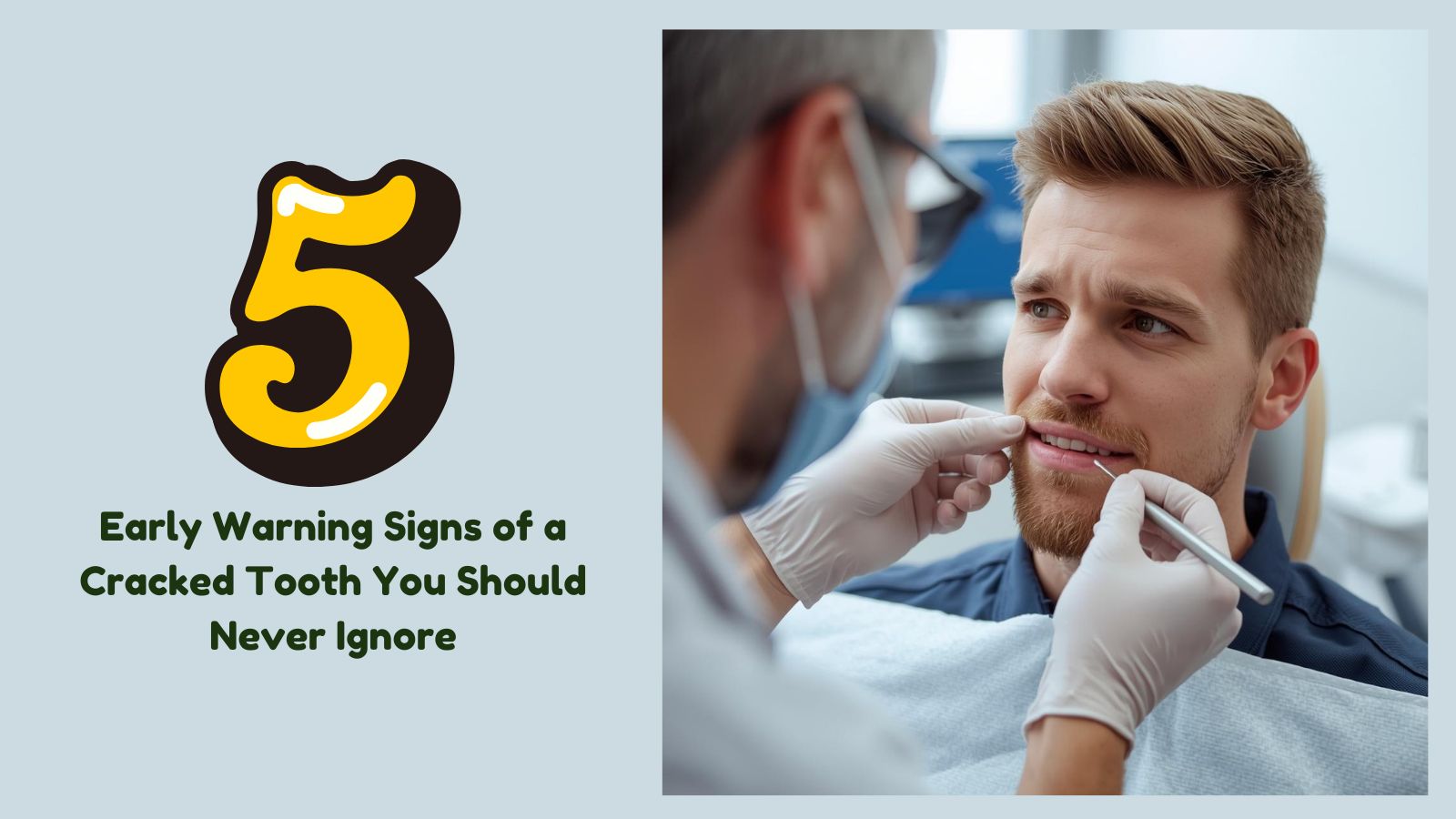
A cracked tooth is not immediately obvious to our naked eyes many times. The symptoms are sporadic, the damage progresses slowly, and it makes it simple to overlook. When the cracks are left untreated, it can result in infection, excruciating pain or most times even tooth loss. You can seek prompt medical attention and clear yourself of more complicated dental procedures in the future simply by identifying the early warning indicators.
What Causes a Tooth to Crack?
Cracking of teeth can happen due to common happenings like chewing hard foods, grinding teeth, unexpected trauma or massive fillings that damage the tooth structure. The risk is further increased by age-related wear and tear. This is particularly true when a tooth has had prior dental procedures.
1. Pain While Biting or Chewing
One of the most commonly recognized symptoms of a cracked tooth is the sharp discomfort or pain when you bite down or release pressure. This is one of the most typical early indicators of a broken tooth. This occurs because the stress causes the crack to slightly expand which hurts the tooth’s inner layers. It is also easier to ignore the discomfort in the initial stages because the discomfort may come and go.
2. Sensitivity to Hot and Cold
A crack may be present if you suddenly become sensitive to hot tea or cold water and it lasts longer than normal. This sensation is normally restricted to a single tooth and may get worse with time. This sensitivity will be in contrast to the broad sensitivity you observe sometimes.
3. Swelling Around the Gums
Inflammation can result because sometimes bacteria seeps into the tooth pulp or surrounding tissues through a fracture. Here are some of the warning indicators. Ignoring the below given symptoms can potentially increase the risk of infection.
- Swelling or tenderness near the affected tooth
- Occasional bleeding around the gum line
- A feeling of pressure or soreness
4. Unexplained Toothache
If there are no cavities, a dull or throbbing toothache could be a warning sign. Inconsistent discomfort from cracked teeth mostly gets worse at night or during meals. This soreness may show pulp involvement when left unchecked and can necessitate more advanced treatments.
5. Visible Lines or Rough Edges
Sometimes cracks can be seen as fine lines running on the surface of the tooth. You might also sense a sharp or coarse edge on your tongue. Even though not all cracks are visible to the naked eye, a dentist should be consulted right away if there is a visible change in texture.
Early Detection Helps
Tooth crack can be stopped from penetrating deep into the tooth. This can be done by taking early treatments immediately after consulting a dentist. Monitoring or protective restorations may be sufficient for minor cracks. Deeper cracks can however harm the pulp and this might require Root Canal Treatment in Chennai in order to save the tooth and ease discomfort.
When to See a Dentist
If you are experiencing any ongoing pain, sensitivity, or swelling do not wait for the symptoms to get worse. Your original tooth can be preserved and tooth extraction can be avoided with prompt diagnosis by clinical examination and imaging (digital X-rays).
Even though a broken tooth may begin minor, ignoring it and not taking any prompt treatment can damage the teeth’s inner layers and this can have major repercussions. You can safeguard your dental health and avoid long-term issues by being aware of early warning indicators and getting professional treatment.