The idea that a root canal “kills” a tooth and leaves it brittle and vulnerable to fracture is one of the most popular myths in dentistry. Because of this misperception, patients choose extraction over root canal treatment because they are afraid that a root canal may weaken their natural tooth. The truth is completely different. Your natural tooth can be saved and preserved with a root canal treatment. If the treatment is done correctly and is followed by an appropriate restoration, it can last a lifetime.
What Actually Happens During a Root Canal?
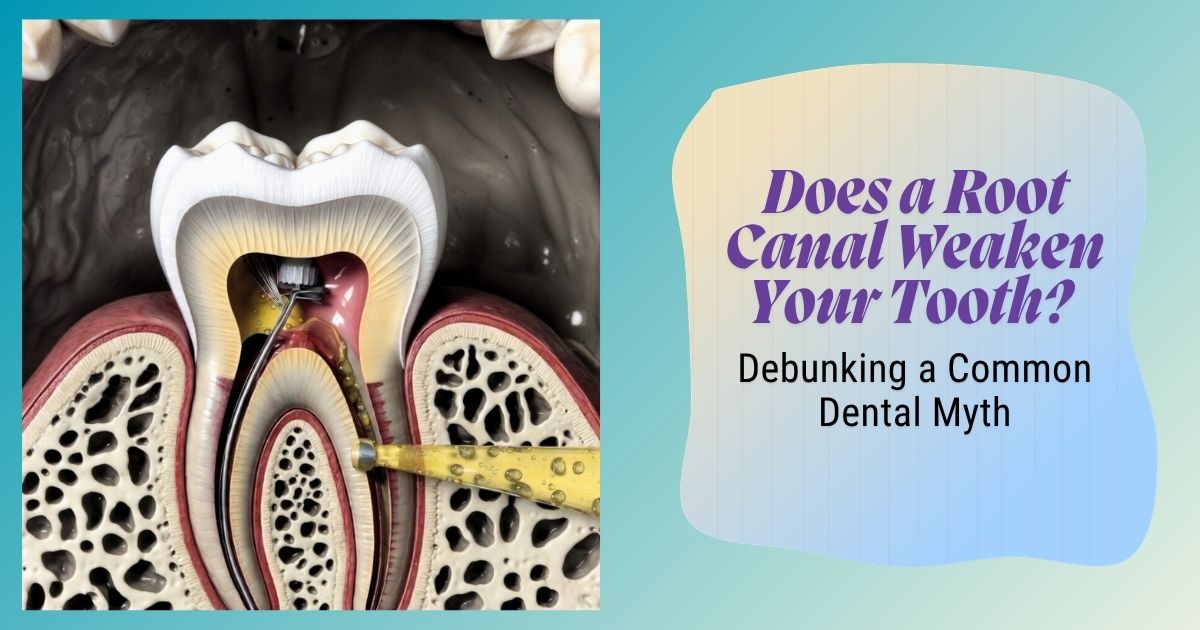
When you understand the process of how root canal treatment is done, it is helpful to see the truth on why root canal does not weaken a tooth. The outside enamel, middle dentin and inner pulp chamber are the three layers that make up a tooth. The inner pulp layer contains blood arteries and nerves. The tooth becomes painful and may develop an abscess only when extensive decay, trauma or infection reaches the pulp.
During a root canal treatment procedure, the dentist removes only the tooth’s diseased pulp tissue. The enamel and dentin, the two hard outer structures, are left as it is. After the removal of the infected pulp, the root canals are cleaned, shaped, and filled with gutta-percha. Gutta Percha is a biocompatible inert substance. The entire procedure preserves the outward architecture of the tooth while eliminating the source of illness.
Does the Tooth Become Weaker?
The answer is not a complete “No”. There is a significant background to this claim. When you compare an entirely healthy, unaffected tooth, a tooth that has received root canal treatment is slightly fragile only. But the root canal itself is not the main reason for this. There is definitely a slight decrease in strength. This is because of the following reasons:
- Pre-Existing Structural Loss: The tooth has already lost its natural structure by the time a root canal is done. This is because of deep decay, any existing fillings or fractures. This is true in most cases
- The Access Opening: A small access hole in the biting surface is created to reach the pulp chamber when a root canal treatment is done. So it is true that some tooth structure is impacted. But modern techniques in root canal procedure have minimized this.
- Loss of Moisture: A natural tooth receives some flexibility from the moisture that is lodged in the dentin. However, after root canal treatment, the tooth becomes slightly more dehydrated. This can slightly make it more prone to cracking when extreme force is applied.
The Critical Role of the Final Restoration
The quality of the restoration that is placed after a root canal treatment is an important factor that determines the tooth’s long-term strength. The dental crown after a root canal done tooth gives it absolute strength.
Why a Dental Crown Is Essential
- Cuspal Protection: The cusps of back teeth (molars and premolars) are prone to splitting after a root canal treatment. The dental crown encases the entire tooth. This evenly distributes chewing pressure and holds the cusps together.
- Preventing Fractures: Vertical root fractures are more common in teeth repaired with just a simple tooth filling following a root canal treatment. This vertical root fracture results in tooth extraction. That is why a dental crown after a root canal treatment is always recommended.
In case of front teeth, a well done tooth filling might be adequate. This is because the front teeth are subjected to less chewing force. A dental crown is highly recommended for the root canal-treated molar teeth.
Choosing the Right Care
When a skilled dentist performs root canal treatment and gives the necessary dental crown, the root canal done tooth remains normal for many years. So the secret is to definitely get your dental crown after the root canal procedure.
Expert Root Canal Treatment in Chennai
Choosing Expert Dental Care for root canal treatment in Chennai guarantees that you will be treated by knowledgeable and experienced dentists. Our dentists employ cutting-edge methods to maintain as much of your original tooth structure as possible. They will also advise you on the best type of dental crown which will help you safeguard your tooth.
Contrary to popular belief, a root canal does not weaken your tooth. The process itself is a preservation method rather than a destructive one. The treated tooth loses part of its natural flexibility. The correct restoration like a well-fitting crown gives the tooth its actual strength after the root canal treatment. You can preserve your original tooth and avoid the extraction procedure. It may be noted that replacement procedures like dental implants after tooth extraction are costlier options. When properly cared for, your root canal done natural tooth is still your best option.