Nobody wants to get a root canal just like that. The term itself has come to represent dental anxiety. It is a procedure that many patients would stop at nothing to avoid. Therefore it is a natural and pressing question. Is it really possible to avoid having a root canal? The likely answer is “it depends.” In certain situations, with early intervention it is possible. In other cases, postponing the treatment will just make a root canal treatment your sole choice. Knowing the difference could save both your peace of mind and your tooth.
What a Root Canal Actually Treats
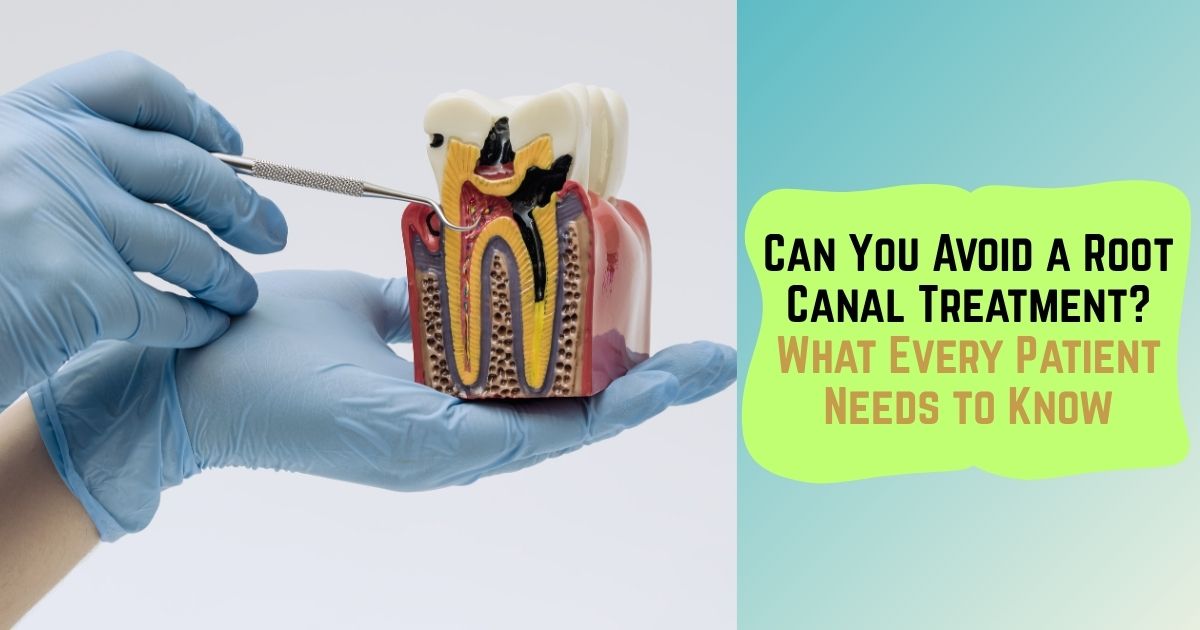
We must first understand the purpose of a root canal treatment. This understanding can give more details. The pulp chamber, a soft tissue core that contains connective tissue, blood vessels and nerves, are all located inside each tooth. This pulp becomes infected and inflamed when germs are able to enter due to conditions like extensive decay, a damaged tooth or repeated dental operations. The pulp cannot heal itself like other bodily tissues. The nerve will just perish after it faces irreversible damage. A root canal treatment preserves the integrity and functionality of the exterior tooth structure. It does so by removing this dead or dying tissue, cleaning the interior space and closing it.
When a Root Canal Is Unavoidable
There are clear clinical indicators that the pulp cannot be saved. A root canal is the sole choice to preserve the tooth if you encounter any of the following scenarios.
- Spontaneous and a Throbbing Pain: Advanced pulpitis is a condition that happens due to inflammation of the nerve. It can be decided with the pain that begins without a trigger or wakes you up at night.
- Sensitivity to Heat or Cold: The nerve is seriously damaged if there is any discomfort that continues for longer than 30 seconds after drinking hot coffee or cold water.
- Swelling or a Pimple on the Gums: If there is a small, recurrent lump (fistula) on the gums close to the tooth root. Invariably, pus flows from this abscess. In such a scenario, it really means an infection has already spread outside of the tooth.
- Deep Decay Reaching the Pulp: When a cavity appears on an X-ray or during a clinical examination, it means bacteria have already entered the nerve space. This infection full of bacteria and other microbes has essentially penetrated the pulp chamber.
A root canal is a rescue effort in all the above scenarios. It is definitely not an option. The only other option is extraction. Extraction should always be followed by an implant, bridge, or denture. All these are more involved and expensive than preserving the natural tooth. That is why the Root Canal assumes significance.
How You Might Actually Avoid a Root Canal
Only in the early phases Root Canal can be avoided. It can be avoided before the nerve sustains irreversible damage. Here’s how:
Early Decay Intervention
A straightforward filling can be used to treat a minor cavity that has not yet reached the pulp. The best method for avoiding a root canal is only in this scenario. When dental examinations are conducted in regular intervals dental decay can be identified early. In this scenario even before any pain sets in, the decay can be filled and the root canal can be avoided.
Addressing Deep Decay Promptly
Your dentist may try a “deep filling” or insert a protective liner to promote pulp healing if a cavity is really deep. This scenario is possible only when the decay has not quite penetrated the pulp. After that the tooth is monitored continuously for any indications of delayed inflammation.
Fixing Cracked or Broken Teeth Quickly
Infection can be avoided by sealing a small break with a crown before bacteria enter the pulp. The crown not only keeps microorganisms out of the tooth but also holds the tooth together.
Good Oral Hygiene and Diet
The best tactic to avoid the root canal is still prevention. The danger of decay is almost eliminated by brushing twice a day with fluoride toothpaste, flossing, avoiding sugary snacks and getting regular dental cleanings. That is why a regular dental visit is strongly recommended.
The Trap of Waiting
Whenever we experience modest dental discomfort, we normally tend to “wait it out.” This tactic of avoiding is full of risks. The tooth can feel a little painful today and then can completely stop aching. It does not mean it has healed. It simply means the nerve has perished. The virus is now silently penetrating the jawbone. So in this scenario waiting does not solve the issue. It actually complicates the course of treatment and makes recovery more challenging.
Avoiding Root Canal – The Bottom Line
A root canal cannot be avoided, once the nerve is affected or infected, or irreversibly inflamed. However, early detection and timely treatment can prevent you from getting to that stage. Do not wait if you are having any dental pain. Your natural tooth has the best chance of survival if you get root canal treatment as soon as possible. It will be less painful, cost less and heal more quickly. This is better than waiting until it is too late and it becomes complicated.