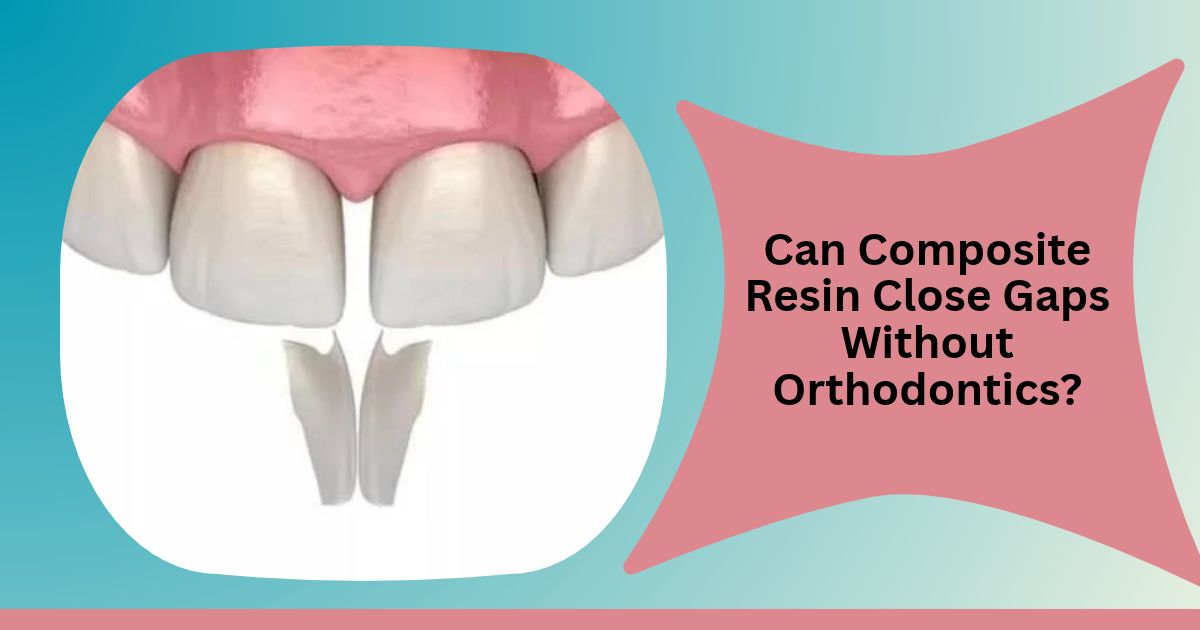
One of the most common aesthetic complaints dentists encounter is a gap between the two front teeth (diastema). Traditionally these gaps have been corrected using orthodontics. However, using modern cosmetic dental techniques we can now close a gap much quicker by using composite bonding. This involves adding composite material directly to the teeth which can be shaped to give the appearance of larger teeth. But wait. Can composite bonding be used as an alternative to braces to close a gap for all cases? That will completely depend on why the gap has occurred and how big the gap is.
Let us Understand How Composite Resin Closes a Gap
This is an additive treatment. Your dentist will choose a composite material which has been matched to your enamel colour. They will then gently roughen the surface of your teeth and apply the composite material in very thin layers. The composite can be shaped to make the teeth either side of the gap look wider to reduce the gap. Each layer of material is set using a special light. The new teeth are then polished to match your natural teeth. The whole process should take between 45-90 minutes and no healthy parts of your tooth will need to be drilled.
When Does Composite Resin Work Well
If you have a minor gap (2-3mm or less) then composite resin is a great option. Bonding is a fast solution that will leave you with an instant improvement to your smile. As long as your teeth are generally straight, and your bite is fine, bonding will provide a quick, cheap solution to your gap. Plus, it can easily be reversed if you are not happy with the outcome. The composite can easily be removed so there will be no damage to your teeth.
When Composite Resin Does Not Work and Is the Wrong Choice
This is an important point that is often not explained clearly. If the gap is caused by either a dental or skeletal issue then bonding using composite resin will not address this. It is like simply covering up an underlying problem that calls for attention. As a result, if your teeth are crowded/rotated or you have a malocclusion then the gap can return over time as the teeth are pulled apart by a large frenum (tissue attaching lips to the gum).
- Large gaps (>3-4mm): When bonding alone is used to close large gaps it can give an unnatural appearance to the teeth. This will give an obvious imbalance to the proportions, making the teeth look bulky.
- Underlying issues with tooth positioning: If the gap is caused by teeth being out of line or a small arch, adding composite will not have any affect on the position of the roots. The bite will not be altered meaning functional issues are still present.
- Frenum attachment: A thick low frenum attachment can cause the gap to remain. Often if bonding does not address the frenum attachment the gap will close.
- Staining and chipping: Composite is a porous material which is not as strong as enamel. Over time coffee and tea will stain it. Chipping can also occur due to biting nails or eating hard food. The average life span of composite is between 5-7 years.
The Long-Term Trade-Off
Composite bonding is quick, cheap and non-invasive. However, it is purely a cosmetic option. However, Orthodontics (traditional braces or clear aligners) actually moves your teeth and resolves the issue at source. It also provides much more long term stability. If you follow the retainers protocol then 85% of patients will have stable results after 10 years with orthodontics closing the gap. Whereas composite bonding would require occasional top-ups.
If you are looking for a definitive solution and are happy to spend some time on treatment, orthodontics is the gold standard. If you have a small and simple gap and wish to have an instant solution, bonding is a good option as long as you are aware of the limitations.
Composite Resins – Making the Right Decision
The only way to determine the best type of treatment is to have a proper clinical assessment carried out by a dentist. The dentist will measure the gap, assess how your teeth fit together (your bite), the position of your frenum and the condition of your gums and teeth. Sometimes it is best to combine treatments. Orthodontics can help close up most of the gap and then bonding can be used to fine tune the appearance.
If orthodontic treatment is required to correct the gap then having an assessment for Dental Braces in Chennai with Expert Dental Care. The dentists at Expert will ensure that your treatment is specifically tailored to you. This ensures that you do not have a generic cosmetic solution that may need to be replaced in a few years.